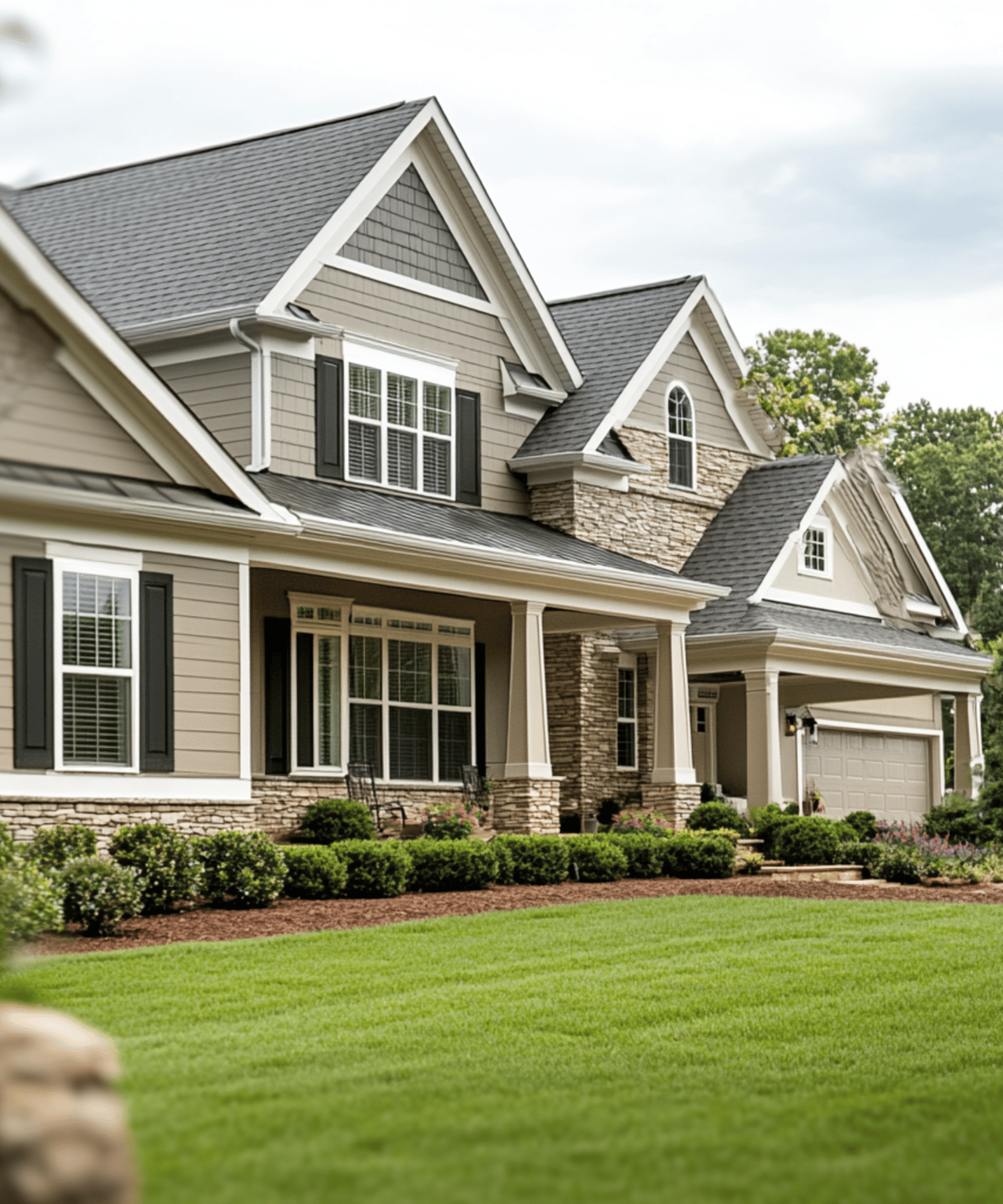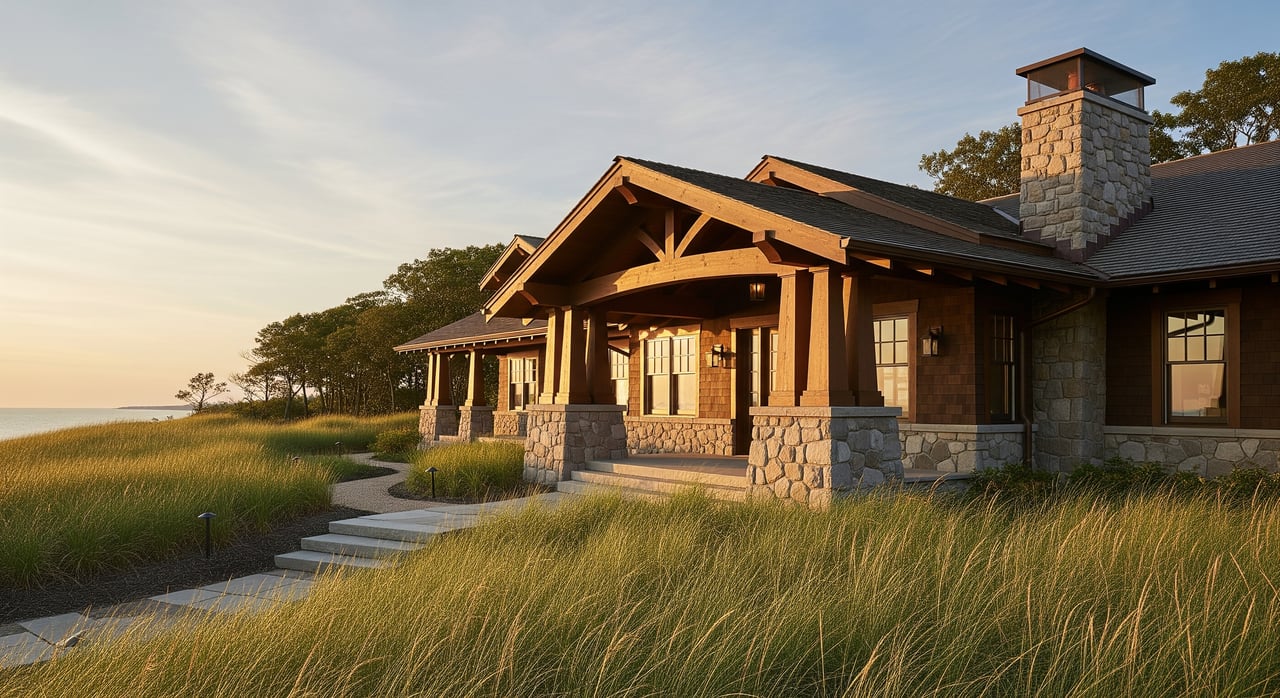
If you love the grounded, wood‑rich feel of Craftsman architecture, the historic Dune Acres Clubhouse gives you a ready playbook. You want a home that fits the dunes, looks great in photos, and resonates with buyers who value authenticity. In this guide, you’ll pull clear, practical ideas for exteriors, interiors, and listing photography that work in the Lake Michigan shoreline climate and showcase the best of Craftsman design. Let’s dive in.
Why the clubhouse inspires in Dune Acres
The dunes shape everything here. Wind, shifting sand, and native plant communities call for low‑impact design that blends into the landscape. Craftsman architecture answers with low, horizontal massing, deep porches, honest materials, and visible structure.
That same language translates beautifully to today’s homes. You can echo the clubhouse’s warmth with durable, low‑maintenance materials that stand up to lake weather while keeping the style intact. The result feels timeless in person and photographs with depth and character online.
Exterior cues buyers notice
Rooflines and eaves
Low‑pitched gables with wide overhangs signal Craftsman intent right away. Exposed rafter tails and decorative knee braces add texture and shadow lines that read well in listing photos. For lower maintenance, use pressure‑treated or engineered trim, or fiber‑cement accents that keep the look without the upkeep.
Porches and entries
Deep, covered porches create an indoor‑outdoor bridge that buyers love. Tapered columns set on stone or masonry piers feel substantial and shelter the entry from wind and drifting sand. Highlight heavy porch beams and visible joinery to communicate craftsmanship from the first step.
Stone and masonry
Natural stone at the foundation, chimney, or porch piers visually anchors the house to the site. Indiana limestone and other regional stone choices are historically appropriate and photograph beautifully against warm wood tones. If you are repairing existing masonry, follow preservation principles so new work looks compatible but remains clearly new on close inspection.
Siding that lasts
Classic claddings include wood shingles, clapboard, and board‑and‑batten. Shingle accents on gable ends nod to the period. For lakeshore durability, consider high‑quality fiber‑cement or engineered wood that replicates the texture and shadow of traditional siding with less long‑term maintenance.
Windows and doors
Group double‑hung or casement windows to create horizontal bands and frame dune or tree views. Keep the Craftsman feel with multi‑light upper sashes and substantial trim. For energy performance, choose insulated units with true or high‑quality simulated divided lights, and a solid or paneled wood door with a small multi‑light window and visible hardware.
Exterior colors
Earth tones work best in the dunes. Think olive and forest greens, warm browns, deep brick reds, tan body colors, and cream or soft neutral trim. Stain or oil finishes on wood let the grain shine and reinforce the handcrafted mood without feeling overly rustic.
Native landscaping
Lean into the site. Use native dune and prairie species such as little bluestem, hardy prairie grasses, sand‑tolerant shrubs, beach plum, and low junipers. Layer stone steps, low retaining walls, and native groundcovers to manage erosion and create natural transitions that keep your focus on the home’s horizontality.
Interior warmth that sells
Beams and built‑ins
Exposed beams or timbered ceilings instantly echo clubhouse character, even with faux beams. Built‑in bookcases, window seats, and sideboards are signature Craftsman moves that add storage, create cozy nooks, and give photographers strong focal points. These elements stage easily with simple accessories.
Hearth as focal point
A generous fireplace in stone, brick, or handcrafted tile becomes the heart of the home. It is a natural anchor for listing photos and gives buyers a mental image of how they will live there. Keep the mantel substantial and the surround tactile, then layer soft lighting to highlight detail.
Woodwork and finishes
Quartersawn oak is the period classic, but any natural, warm‑stained wood with visible grain supports the look. Specify wide baseboards, stout window and door trim, and simple, robust profiles. Engineered hardwoods with wide planks offer stability in a coastal climate, and reclaimed wood adds authenticity without feeling precious.
Floors and tile
Wood floors throughout keep spaces visually connected and warm. In entries and hearth zones, consider tumbled stone or brick. Around fireplaces or as kitchen backsplashes, use hand‑glazed or matte‑finish tiles in modest, geometric patterns that nod to Arts and Crafts precedents without overwhelming the room.
Lighting and glass
Choose simple, geometric fixtures in bronze, patinaed copper, or dark iron. Stained or leaded glass in pendants, transoms, or cabinet doors filters light and adds texture. Make sure new fixtures meet current electrical standards while keeping the aesthetic clean and consistent.
Interior palette
Warm creams, soft tans, muted ochres, moss greens, and deep brick reds complement natural wood. Add wool rugs, leather seating, and woven throws for tactile layers that show well on camera. Keep patterns restrained so the woodwork and architecture stay center stage.
Built for the lakeshore
Climate durability
Expect freeze‑thaw cycles, wind‑driven rain and salt spray, and shifting sand. Choose corrosion‑resistant fasteners, galvanized flashing, and appropriate sealants. For roofing, specify architectural shingles or coastal‑rated metal with proper drip edges and flashing to manage water.
Preservation with performance
If your home has historic significance or sits within a community with design guidelines, consult preservation authorities before altering character‑defining features. You can usually retain visible wood, masonry, and window profiles while upgrading performance using recognized preservation approaches.
Energy upgrades
Improve comfort and operating costs with targeted insulation, high‑performance window assemblies that match historic profiles, and discreetly placed HVAC systems. Consider heat recovery ventilation in tighter envelopes to manage moisture and indoor air quality.
Cost smart sourcing
Authentic focal elements such as a stone hearth, true divided‑light windows, reclaimed timbers, or quartersawn oak millwork carry premium costs. Use them where the eye lands, then select cost‑effective substitutions like fiber‑cement siding or engineered flooring in secondary areas. Look for local craftsmen and salvage options to add character and control budgets.
Permits and pros
Hire contractors or architects with Craftsman and preservation experience for significant work. For smaller upgrades, a finish carpenter who understands traditional joinery will make a noticeable difference. Check Porter County permitting requirements before you start to avoid delays.
Staging and photos that convert
What to feature
- Center compositions on the hearth or built‑ins to signal warmth and quality.
- Capture porch transitions from inside and out to show connection to dunes and trees.
- Include tight detail shots of wood grain, joinery, tile edges, and hardware for texture.
Styling cues
- Choose human‑scale furniture that sits low and grounded to match the architecture.
- Layer wool rugs, linen curtains, leather, and simple pottery for depth without clutter.
- Keep accessories era‑appropriate but neutral so the rooms feel timeless, not themed.
Seasonal timing
- Summer images highlight dune vegetation and lake light.
- Late fall and winter make interior warmth and lit hearths shine.
- Clear porches and entries of sand and time exterior shoots for calmer days to avoid wind‑blown foliage.
Quick action checklist
- Rooflines: low‑pitch gables, wide eaves, exposed rafter tails, and knee braces.
- Porches: deep cover, tapered columns on stone or masonry piers, visible joinery.
- Masonry: natural stone at foundation, chimney, and porch elements with compatible repairs.
- Cladding: shingles or clapboard with fiber‑cement or engineered options for durability.
- Openings: grouped windows with multi‑light uppers, paneled wood door with small lights.
- Colors: earth‑tone body with restrained, contrasting trim and natural wood finishes.
- Interiors: beams or faux beams, built‑ins, stone or tile hearth, warm wood millwork.
- Fixtures: mission‑style lighting, patinaed metals, stained or leaded glass accents.
- Landscape: native dune species, stone steps, and groundcovers to manage erosion.
- Photos: feature hearths, porch transitions, and close details with warm lighting.
What this means for value
When you apply these cues with durable materials suited to Lake Michigan, your home feels authentic, photographs beautifully, and connects with buyers seeking substance and ease. Strong first impressions online turn into confident showings in person. You protect the character that makes Dune Acres special while giving today’s buyers the comfort and performance they expect.
Ready to map these ideas to your property and market them with luxury‑grade photography and distribution? Connect with Unknown Company to Request a Free Home Valuation and a clear, step‑by‑step plan for elevating your home’s presentation.
FAQs
What is the Craftsman style in simple terms?
- It highlights low, horizontal roofs, deep porches, visible structure, and natural materials like wood and stone to feel connected to the landscape.
How can I add Craftsman character to a newer Dune Acres home?
- Start with trim and texture: beef up window and door casings, add a shingle gable accent, upgrade the front door, and install a built‑in or a beam feature.
What exterior materials hold up best near Lake Michigan?
- Fiber‑cement siding, engineered trim, corrosion‑resistant fasteners, and coastal‑rated roofing perform well while keeping a Craftsman look.
Which native plants fit a dunes landscape?
- Little bluestem, hardy prairie grasses, beach plum, low junipers, and other sand‑tolerant shrubs help with erosion control and a natural, low‑impact look.
What interior updates create the biggest buyer impact?
- A stone or tile‑faced hearth, a standout built‑in, warm wood millwork, and layered lighting will anchor photos and make rooms feel welcoming.
Do I need permits for Craftsman exterior changes in Porter County?
- Most structural or exterior changes require permits, so check county requirements and consult local authorities before starting work.