Why do two lakefront homes on the same Harbert street sell for very different prices? If you are trying to buy or sell on the Lake Michigan shoreline, the answer can feel opaque. You want a clear, local framework that explains what actually moves value so you can price confidently and make smart tradeoffs.
This guide breaks down the specific features Harbert buyers pay for, the risks lenders and insurers care about, and a simple worksheet you can use to estimate price bands. You will also get a due diligence checklist tailored to Chikaming Township’s shoreline. Let’s dive in.
Harbert lakefront basics
Harbert sits in Chikaming Township along the Lake Michigan shoreline near New Buffalo, Union Pier, and Sawyer. The area blends small‑town amenities with beaches, sunsets, and quick access to Chicago. That mix attracts primary homeowners, second‑home buyers, and investors, which creates both premium pricing and seasonal swings in demand.
Inventory on desirable stretches of shoreline is often limited. When a well‑positioned property hits the market in late spring or summer, showings concentrate and strong offers follow. In the off‑season, pricing can be softer, and well‑priced listings still move.
Property features that move price
Frontage and shoreline
Not all frontage is equal. Private sandy beach with direct walkable access typically commands the highest premium. Bluff or elevated frontage can deliver big views and privacy, though erosion stability and maintenance become major considerations.
Dune or vegetated shorelines may limit direct access and require careful permitting, yet the natural setting adds aesthetic appeal. Rock or riprap shore reduces recreational use and usually lowers buyer willingness to pay. Frontage length matters too, and many local buyers think in terms of “front feet.”
View and orientation
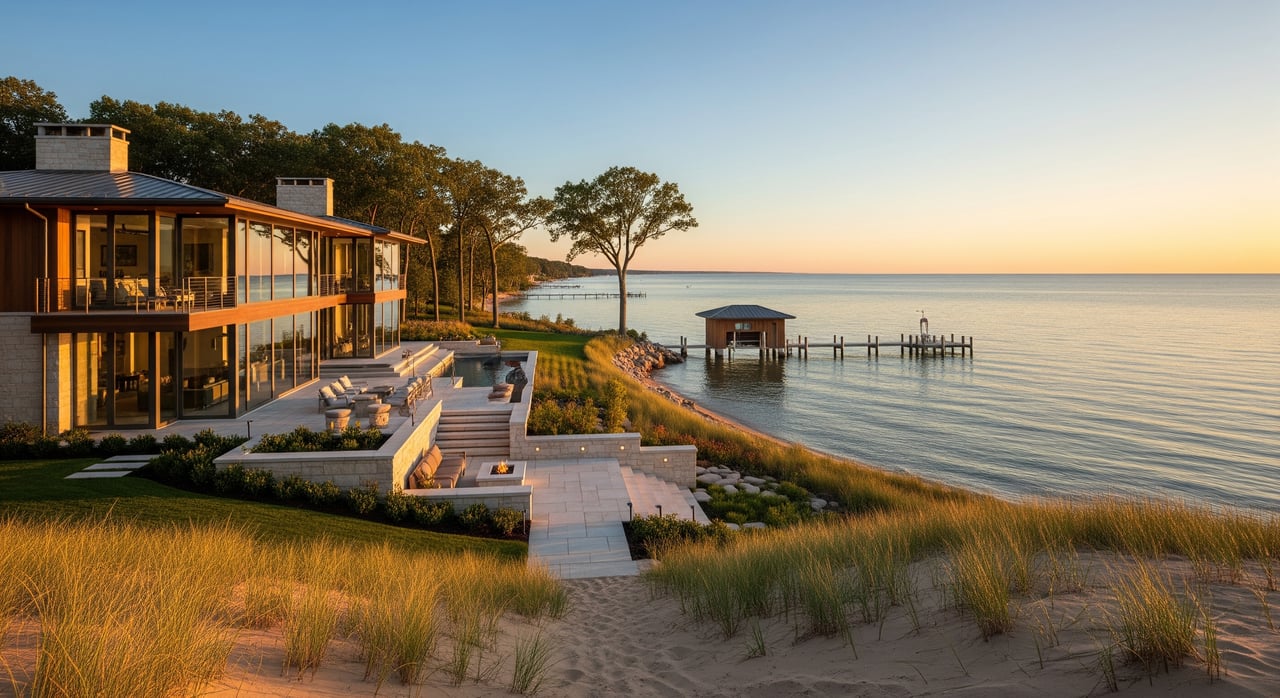
Full, unobstructed west‑facing views of Lake Michigan and sunsets carry a clear premium. Trees, neighboring homes, and topography can shift a full lake view to partial or peekaboo. Strong line‑of‑sight privacy, without neighbors overlooking your deck or beach, supports higher pricing.
Access and exclusivity
Deeded private frontage is the gold standard. Shared deeded access, such as an association beach, is valuable but generally prices below true private frontage. Proximity to busy public beaches can reduce perceived privacy, while walkability to town amenities can be a plus for some buyers.
Structure and upgrades
Architecture, craftsmanship, and high‑quality finishes resonate with premium buyers. Recent system updates and renovations, like kitchens, baths, HVAC, roof, and septic or well improvements, reduce buyer risk and support stronger pricing. Usability for lake living also matters: wide decks, easy egress to the beach, storage for watercraft, and mudrooms add value. Shoreline protective structures that are permitted, engineered, and documented help; unpermitted or aging works can be a liability.
Lot and landscape
Deeper lots and meaningful landscape buffers increase privacy and future options. Native vegetation and thoughtful dune‑friendly landscaping that protects views while managing erosion are positives for both enjoyment and long‑term stability.
Utilities and infrastructure
Many lakeshore homes use septic and wells. Capacity, age, and condition are material to value. Broadband reliability, year‑round road access, winter maintenance, and parking all influence how easily you can use the home and should factor into pricing.
Legal and title items
Easements, deed restrictions, association rules, and conservation or historic setbacks can limit redevelopment or control access. These features can either protect value or reduce flexibility, so verify them early.
Market and regulatory pressures
Seasonality and demand
Demand peaks in late spring and summer. Out‑of‑state second‑home buyers, especially from Chicago and Indiana, add competitive pressure on prime lakefronts. Limited inventory can elevate premiums for well‑positioned listings.
Flood and erosion risk
Flood zones influence mortgage options and insurance costs. Review maps and elevation certificates through the FEMA Flood Map Service Center to understand your risk profile. Bluff stability and historic shoreline change also matter, and buyers often weigh engineering opinions and the cost of mitigation.
For shoreline dynamics and bluff processes, consult USGS research on Great Lakes coastal processes. For permits tied to coastal work, refer to Michigan EGLE coastal permits.
Permits and zoning
Shoreline stairs, revetments, seawalls, and dune work often require township, county, and state permits. Unpermitted structures can trigger enforcement and reduce value. Local zoning and setbacks in Chikaming Township shape redevelopment potential and should be considered in any pricing strategy.
Insurance and carrying costs
Flood and wind coverage costs vary by zone, elevation, and insurer appetite. Some high‑risk properties can be more expensive or harder to insure. Buyers frequently fold annual premiums into their total affordability calculation.
Rental potential
Short‑term rental potential can lift demand for investors. Any HOA rules or township restrictions also affect value and should be verified before underwriting rental income.
Simple pricing worksheet
Use this framework to translate features into price ranges, then cross‑check with local waterfront sales. The multipliers below are illustrative only. Your final number should be supported by recent Harbert and Chikaming Township comps.
Set a baseline: Choose non‑waterfront comps with similar size and quality in Harbert or nearby, or use a local per‑square‑foot average for similar construction.
Pick a per‑unit view: Decide whether to adjust by price per front foot, per buildable acre, or per square foot of living area.
Apply feature adjustments: Layer in frontage type, view, access, condition, hazards, and recent upgrades.
Reconcile: Compare the result to 3–6 recent lakefront comps and refine until your estimate sits within the observed market band.
Illustrative example:
- Baseline (non‑waterfront comp): $500,000
- Private sandy frontage: +30% → $650,000
- Unobstructed west view: +15% → $747,500
- Recent high‑end renovation: +10% → $822,250
- Erosion mitigation required (estimated $75,000): −$75,000 → $747,250
- Final check: Compare to recent sales of similarly featured Harbert lakefront properties and adjust.
Tips for use:
- Keep a simple worksheet with your baseline and each adjustment so you can explain your logic.
- For unique properties or architectural standouts, be cautious. Premium buyer taste can outpace simple percentage models.
- Always validate with local sales, county records, and real repair or mitigation costs.
Due diligence checklist
Before you write an offer or set an asking price, gather the right documents and data:
- Deed, title, and survey: confirm riparian rights, easements, and front feet.
- Recent comps: prioritize 12–24 months of waterfront sales with similar frontage, access, and condition.
- Flood risk: review the FEMA Flood Map Service Center and any elevation certificate.
- Permits and shoreline history: verify Michigan EGLE and local permits for seawalls, revetments, stairways, and dune work using Michigan EGLE coastal permits.
- Bluff stability and erosion: seek an engineering opinion or historical shoreline data; consult USGS coastal process research.
- Septic and well: obtain inspections, age, capacity, and repair estimates if needed.
- Insurance: price homeowner and flood coverage early to confirm insurability and carrying costs.
- Shared access or HOAs: confirm maintenance obligations, bylaws, and contribution history.
- Building permits and warranties: validate recent renovations and system upgrades.
Timing your sale or purchase
If you are selling, consider listing just before peak demand so your marketing builds momentum into late spring and summer. Invest in clear documentation: permits, surveys, septic records, and shoreline engineering if applicable. Strong preparation supports premium pricing and smoother diligence.
If you are buying, align your search window with the seasonal flow but stay open to off‑season opportunities. Fewer buyers in winter can mean more negotiating room, especially for properties that need work or have unresolved permit items.
How we help in Harbert
You deserve both lifestyle storytelling and rigorous analysis. Our advisory approach focuses on clear valuation logic, premium presentation, and national distribution that reaches the right buyers. We package comparable sales, frontage and view analysis, hazard and permit diligence, and concierge marketing into one process.
Whether you are pursuing or listing a lakefront property, we can help you estimate price bands, prep documentation, and position your home to win. Connect with Rob Gow & Chris Pfauser to discuss your goals or request a free home valuation.
FAQs
How much more does private sandy frontage add versus shared access in Harbert?
- Use a baseline from non‑waterfront comps, then apply a premium for private sandy frontage and a smaller uplift for shared access, and always reconcile to recent lakefront sales.
How do bluff stability and erosion risks affect price and financing?
- Documented erosion or unstable bluffs often require mitigation costs that reduce price, and lenders and insurers may require engineering and flood zone verification before approval.
Should you invest in shoreline protection before listing your home?
- Only with the right permits and engineering; weigh the cost, timeline, and buyer perception against comparable sales to see if the investment supports a higher price.
What documents do Harbert buyers ask for on lakefronts?
- Expect requests for deed and survey, flood maps and elevation certificates, EGLE and local permits, septic and well reports, insurance quotes, and any HOA or shared access agreements.
When is the best time to list a Harbert lakefront home?
- Late spring through summer typically concentrates demand and showings, but strong preparation and accurate pricing can create results in any season.