Thinking about a home in Grand Beach and wondering what those HOA fees actually cover? On the Lake Michigan shoreline, associations often coordinate services that individual owners cannot easily handle on their own. You want clarity on where your dollars go and how to judge value. This guide explains typical inclusions, why fees vary, and how to evaluate the total cost so you can buy with confidence. Let’s dive in.
What HOA fees typically cover
Core services you can expect
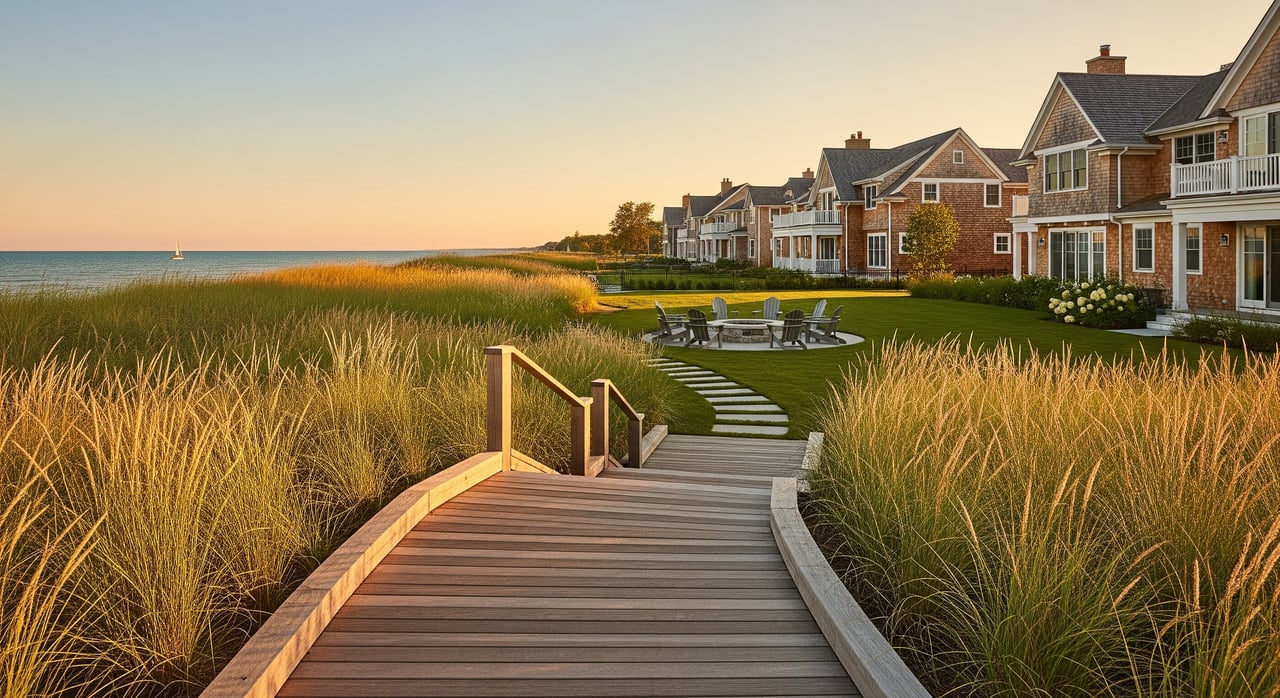
- Private beach access and upkeep. Many associations fund boardwalks, stairs, access points, sand redistribution, and erosion monitoring.
- Dune and shoreline protection. Budgeted projects can include vegetation planting, sand fencing, and engineered dune restoration that follow state permits.
- Private roads and cart paths. Paving, grading, signage, and seasonal maintenance are common line items, with snow removal in winter as applicable.
- Landscaping and grounds. Mowing, tree work, planting, mulching, and irrigation for shared spaces.
- Common area repairs. Boardwalk fixes, pavilion or building maintenance, playground upkeep, trash receptacles, and lighting.
- Insurance for common elements. Liability and property coverage for association-owned structures and shared areas.
- Management and administration. Manager or management company fees, bookkeeping, legal, and accounting.
- Reserves for future projects. Planned savings for major repairs such as roadway work or dune restoration.
- Covenant administration. Communications and enforcement of rules and architectural guidelines.
Sometimes included
- Trash and recycling. Service may cover common areas or all homes, depending on the association.
- Snow plowing. For private roads and common parking where the village does not handle plowing.
- Shared amenities. Picnic pavilions, small clubhouses, tennis courts, bathing facilities, and shared parking areas.
- Limited utilities for common areas. Electric for lighting or water for a small facility.
Less common items
- Lifeguards. Rare in small associations.
- On-site staff beyond a manager. More typical of large resort-style communities.
- Insurance for individual interiors. Uncommon unless the property is a condominium structure.
- Municipal-style services. Streetlights or stormwater systems are possible only if adopted by the association through special assessments or agreements.
Why fees vary in Grand Beach
- Amenities and services. More services, more cost. Beach access, cart paths, parking, and snow removal push dues higher.
- Number of members. Smaller associations split expenses among fewer homes, which can raise per-owner dues.
- Age and condition. Older boardwalks, roads, or shoreline protection need higher reserves and funding.
- Reserve strategy. Fully funded reserves often mean higher regular dues but fewer surprise special assessments.
- Insurance costs. Coastal exposure can increase premiums. Lower deductibles or broader coverage cost more.
- Management model. Professional management adds recurring expense compared with self-managed boards.
- Litigation or capital projects. Legal matters or planned dune and roadway work can raise fees or require special assessments.
- Seasonal operations. Even seasonal services require concentrated budgets to cover short maintenance windows.
In similar small Lake Michigan communities, dues can range from under $100 per month with limited services to several hundred dollars per month where beachfront maintenance, private roads, amenities, and healthy reserves are in place. Exact figures for any Grand Beach association must come from its documents or MLS disclosures.
Beachfront realities to budget for
Beach and dune work can be substantial. Engineered restoration, vegetation planting, and sand management often require permits and ongoing maintenance. Large projects sometimes lead to special assessments. Associations also create and enforce beach-use rules, guest policies, and equipment guidelines, which can influence both your cost and experience.
How to measure total cost of ownership
To compare an HOA home with a non-HOA option, build a simple total cost view over 5 to 10 years.
- Annual TCO example = mortgage payments + property taxes + homeowner’s insurance + annualized HOA dues + utilities + routine maintenance + a prorated reserve for capital projects or special assessments + seasonal costs.
- Use the association’s budget and meeting minutes to surface likely projects and any pending special assessments.
Illustrative example from similar communities:
- Assume annual HOA dues of $1,800, homeowners insurance of $2,000, property tax of $6,000, utilities of $2,400, and routine maintenance of $3,000.
- Annual non-mortgage total would be $15,200.
- Compare that to a non-HOA beachfront where individual owners may face a $20,000 dune project split among a small group. Spread that cost across 5 to 10 years to understand the true difference.
The point is simple. Low dues do not always equal low cost, and higher dues with strong reserves can actually reduce risk.
Due diligence checklist for buyers
Documents to request
- CC&Rs, articles, and bylaws
- Current budget and year-to-date financials
- Reserve study, or reserve balance and policy
- Board and membership meeting minutes for 12 to 24 months
- Association insurance policies and deductibles
- Current dues and a history of past increases
- Records of special assessments over 5 to 10 years
- Any pending litigation disclosures
- Rules and regulations, rental and pet policies, design review rules
- Management and major vendor contracts
- Membership count, plus a plat or map of common areas and access points
Questions to ask
- What exactly do the dues include, line by line?
- Are beach access points private or easements? What are guest and parking rules?
- What capital projects are planned in the next 1 to 5 years, and how will they be funded?
- What special assessments have occurred recently, and why?
- How are reserve contributions set? Is there a current reserve study?
- What does the insurance cover, and what are the deductibles and claims history?
- Are there rental restrictions or short-term rental rules that affect income potential?
- Who maintains the roads serving the homes, the association or the village?
- Is any shoreline work subject to permits or cost-sharing that could change dues?
Red flags to note
- No reserve study and visible deferred maintenance
- Frequent or large special assessments
- Ongoing litigation or large uninsured claims
- Low reserves relative to infrastructure age and scope
- Extremely restrictive rules that may reduce resale or income flexibility
How to compare two Grand Beach homes
- List the services each property requires over 5 to 10 years: beach access upkeep, dune work, roads, insurance needs, and amenities.
- Pull the association’s budget, minutes, and reserve status for the HOA option. Estimate likely assessments.
- For the non-HOA option, price out equivalent services you would fund yourself or with neighbors.
- Convert any one-time projects into a yearly equivalent to create apples-to-apples comparisons.
- Decide whether you prefer steady, predictable dues or lower dues with higher assessment risk.
The bottom line
In Grand Beach, HOA fees often fund the very items that protect lifestyle and value: beach access, dune and shoreline work, private roads, and insurance for common elements. Costs vary based on amenities, membership size, reserves, and upcoming projects. With the right documents and a clear total cost view, you can choose the property that fits your goals and your risk profile.
If you would like a calm, data-driven walkthrough of specific associations and upcoming projects, connect with Rob Gow & Chris Pfauser for tailored guidance on Grand Beach and neighboring shoreline communities.
FAQs
What do Grand Beach HOA fees usually include?
- Common coverage often includes beach access upkeep, dune and shoreline protection, private road maintenance, common-area insurance, management, and reserve funding.
How much are HOA dues in Grand Beach?
- Dues vary widely by services, membership size, reserves, and projects; in similar small Lake Michigan communities they range from under $100 per month to several hundred per month.
Do HOA fees cover my home’s interior insurance?
- Typically no; associations insure common elements, while you carry your own dwelling and contents policy unless the property is a condominium with different coverage.
Why do special assessments happen?
- Large projects such as dune restoration, major road work, or unexpected repairs can exceed reserves and require a one-time assessment to fund the work.
What should I review before making an offer?
- Request CC&Rs, bylaws, budget, reserve study or policy, meeting minutes, insurance details, assessment history, and any pending projects or litigation.
How do I compare HOA and non-HOA homes on cost?
- Build a 5 to 10 year total cost view that includes dues, likely projects, and a yearly equivalent for any special assessments, then compare it to the self-funded costs of a non-HOA option.